Alberese

Parco Naturale delle Maremma

Walking in the Parco Naturale della Maremma

Capalbio


Colline Metallifere


la costa Toscana

        Walking along the Tuscan coast

Crete Senesi

        Abbazia di Monte Oliveto Maggiore

        Walking in the crete senesi

Firenze

Grosseto


Manciano


Montagnola Senese

         Walking in the Montagnola senese


Montalcino

Monte Amiata

         Walking on Monte Amiata

Montepulciano

Prato

Scansano

Siena

          Fonti di Siena

Ospedale Santa Maria della Scala

Sorano

Sovana

Val d'Elsa

          certaldo

          San Gimignano

          Colle di Val d'Elsa

Val de Merse

          Abbazia di San Galgano

Val d'orcia

          Montalcino

          Pienza

          Sant'Antimo

          San Quirico d'Orcia

          Radicofani

          Walking in the Val d'Orcia


Val di Chiana

         Montepulciano

         Montefollonico


Valle d'Ombrone


Montalcino

Cipressen in de Val d'Orcia. Het verhaal van Cyparissus in Ovidius' Metamorfosen

N L       I T
Cipressen in de Val d'Orcia, tussen Montalcino en San Quirico d'Orcia [1]


Toacana ] Galleria di immagini  


Traveling in Tuscany| Cypresses in the Val d'Orcia


More than any other tree, the cypress has become a symbol of the Val d'Orcia. Since ancient times, the cypress has been held in high esteem: the tree was worshipped by the Phoenicians, who believed it represented the eternal flame, whilst the Etruscans used cypresses to adorn tombs. In classical antiquity, it symbolised mourning. The cypress still symbolises death, and many cemeteries in Tuscany are planted with cypresses.


Locatie van het groepje cypressen tussen Montalcino en San Quirico d'Orcia | Ingrandire mappa


n 1890, Vincent van Gogh painted his Road with Cypress and Star, whilst the poet Giosuè Carducci celebrated the beauty of the tree in Davanti a San Guido in Bolgheri.
It was Ovid who, in his Metamorphoses, forever linked the cypress with inconsolable grief and mourning.

Kyparissos

One of the most beautiful stories linking the cypress to death was written down by Ovid. It is the best-known account of the myth of Kyparissos.
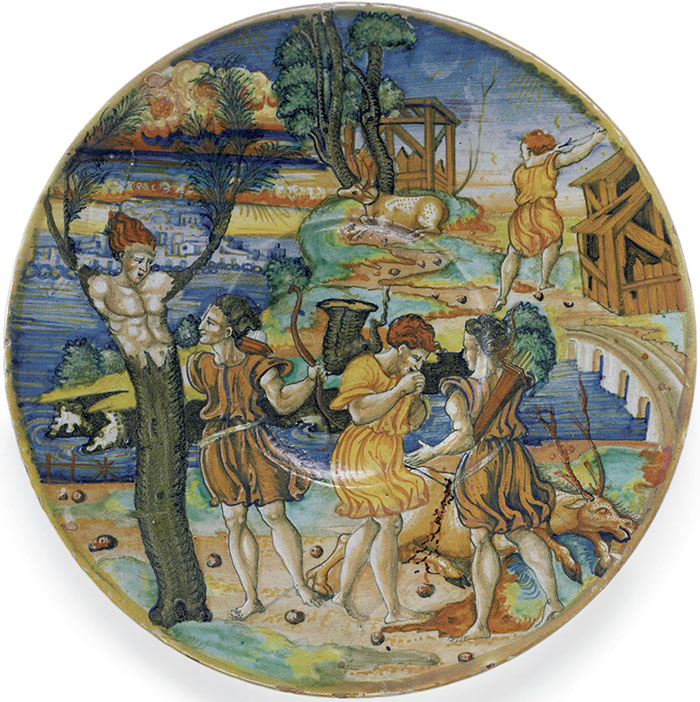
Kyparissos (or Cyparissus) is a figure from Greek mythology. He lived on the island of Keos and was a lover of the god Apollo. Ovid describes the special bond between the handsome youth Kyparissos and a mythical stag that lives in the woods around Cartheia. The animal is tame and Kyparissos is very fond of him. One afternoon, the boy is out hunting and throws his spear at a stag resting in the shady foliage. It turns out to be his favourite stag. Despite Apollo’s countless attempts, Kyparissos is inconsolable and begs the god to let him mourn forever. Apollo then, with a heavy heart, transforms him into a cypress tree, the symbol of mourning.

Giorgio Andreoli, Dish 1525-30, Lustred tin-glazed earthenware, private collection

Giorgio Andreoli, Dish 1525-30, Lustred tin-glazed earthenware, private collection


Galleria fotografica San Quirico d'Orcia


Photogallery San Quirico d'Orcia


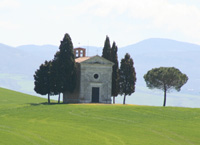
Cypress trees betwen San Quirico d'Orcia and Montalcino   San Quirico d'Orcia, Capella della Madonna di Vitaleta   Cipressi e la Cappella della Madonna di Vitaleta, tra Pienza and San Quirico d'Orcia

Cypress trees between San Quirico d'Orcia and Montalcino


Cappella della Madonna di Vitaleta, nei pressi di San Quirico d'Orcia


Cipressi e la Cappella della Madonna di Vitaleta, tra Pienza and San Quirico d'Orcia


Cypress trees in the Val d'Orcia   Cypress trees in the Val d'Orcia   Villa La Foce, entrance gate with a bunch of cypress trees

Cypress trees in the Val d'Orcia


Cypress trees in the Val d'Orcia


Ook voor de toegangspoort van Villa La Foce staat een groep cipressen


  Via Cassia - Masseria e cipressi (2)   Cappella della Madonna di Vitaleta

Villa La Foce


Via Cassia - Masseria e cipressi


San Quirico d'Orcia, Cappella della Madonna di Vitaleta


La Val d'Orcia sotto la neve | Cipressi della Val d'Orcia (località dei Triboli, San Quirico d'Orcia)

La Val d'Orcia sotto la neve | Cypresses in the Val d'Orcia (località dei Triboli, San Quirico d'Orcia) [2]


Holiday accomodation in Tuscany

Podere Santa Pia is a charming holiday home in southern Tuscany, about twenty kilometres south of Sant'Angelo Scalo (Montalcino).
It is a somewhat secluded but authentic, nature-oriented property. In the last century, it was a small convent for young women.
Podere Santa Pia stands out for its views of rare beauty, a landscape comprising wild woods, olive groves, vineyards and the typical Mediterranean scrub. The natural surroundings and the walking trails that surround it are considered the ideal spot for those who love peace and quiet.


Traveling in Tuscany| Holiday homes in southern Tuscany | Podere Santa Pia


Celebrare il dolce far niente
   

Celebrare il dolce far niente


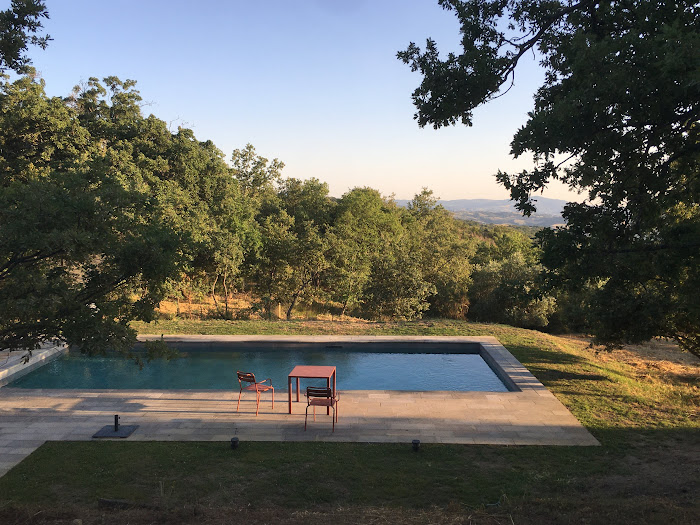
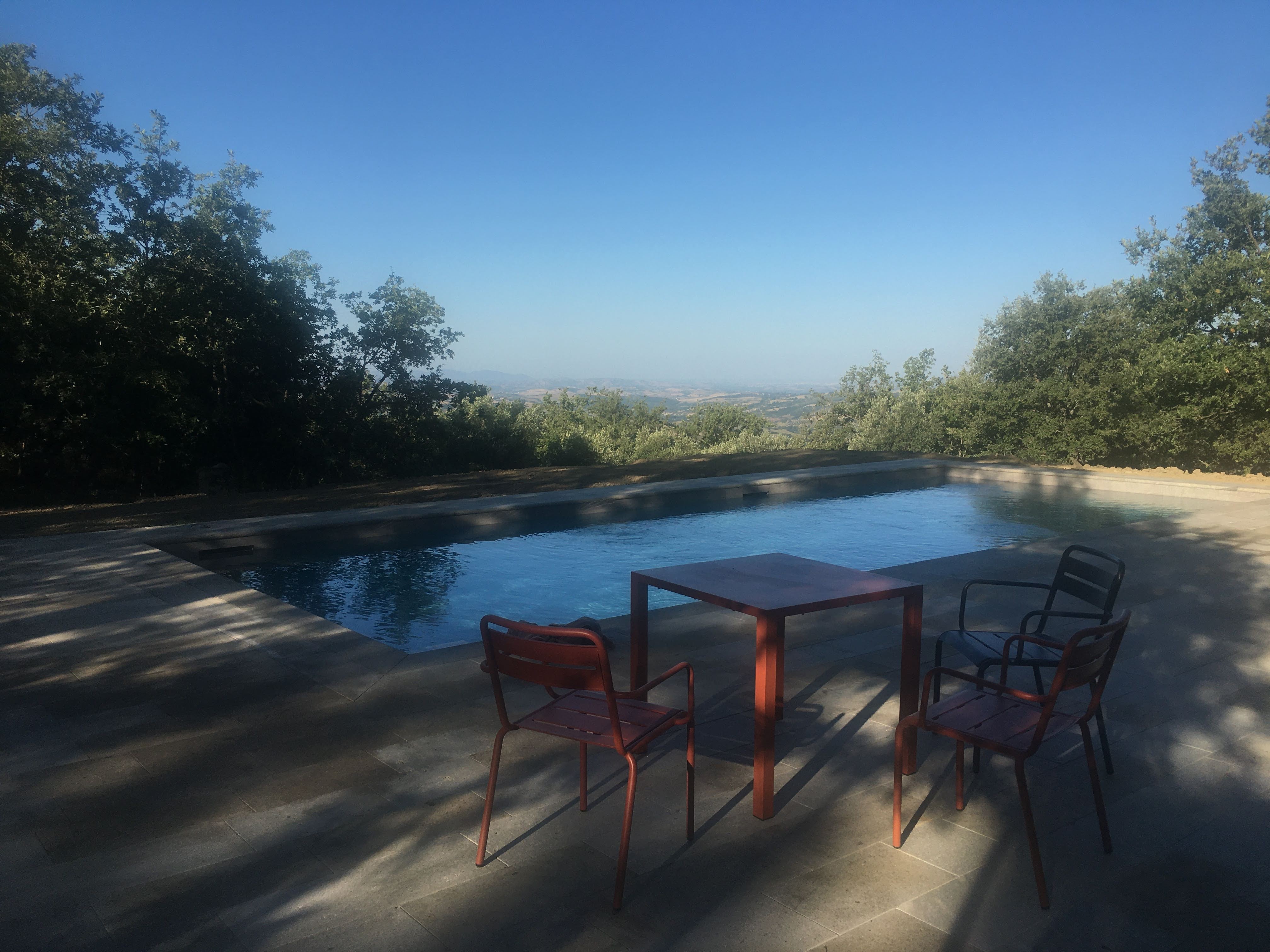
A beautiful early evening by the pool, in the resplendent Tuscan sun, time takes on a languid quality


Visia da Podere Santa Pia, fino al mare e Montecristo


Giardino delle Rose, Horti Leonini, San Quirico d'Orcia   San Quirico d'Orcia   Chiesa San Francesco, San Quirico d'Orcia

Giardino delle Rose, Horti Leonini, San Quirico d'Orcia


San Quirico d'Orcia


Chiesa San Francesco, San Quirico d'Orcia


Early morning light at the private swimming pool at Podere Santa Pia   A beautiful spring morning by the pool, a natural jewel nestled amidst the verdant Tuscan hill   The night pool at Podere Santa Pia exudes a hypnotic sense of purity

Early morning light at the private swimming pool at Podere Santa Pia


A beautiful spring morning by the pool, a natural jewel nestled amidst the verdant Tuscan hill


The night pool at Podere Santa Pia exudes a hypnotic sense of purity


Podere Santa Pia, situated in a particularly scenic valley

Reflections on the pool: Tuscan designs for swimming


#poderesantapiaIl nostro giardino. Insieme ai vigneti e agli uliveti, i cipressi sono l'elemento simbolo del paesaggio toscano

.


Cypress trees in the Val d'Orcia | Birdtraps for blackbirds and thrushes

Cypress trees were once planted to catch birds, particularly thrushes and blackbirds. You can read more about the use of birdlime and cypress trees here.

La Val d'Orcia | Alla scoperta dei tesori d'Italia

Travel guide for Tuscany | Guide for Tuscany | Val d'Orcia map

Damien Wigny, Toscane. 1, Arezzo, Cortone, Casentino, Sancepolcro, Fonds Mercator, 2013

    • ISBN-10: 906153934X (IT)
    • ISBN-13: 978-9061539346 (FR)

An excellent guide to the Casentino and eastern Tuscany; Arezzo, Cortona, Casentino and Sansepolcro are covered in detail in *Tuscany 1: Arezzo, Cortona, Casentino, Sansepolcro* by Damien Wigny, a book of almost 1,000 pages in three volumes. In ‘Itinéraires’, Wigny describes 139 walks through the province of Arezzo. In ‘Monuments’, the sights are described in detail. In ‘Lectures’, Wigny delves deeper into the Etruscans and the Renaissance, but also includes a chapter on fresco techniques as well as one on the enamel painters of Urbino.
The book is available in French and Italian versions.


[1] Photo by lo.tangelini from Soliera / Modena, Italia, licensed under the Creative Commons Attribution-Share Alike 2.0 Generic license.
[2] Photo by Antonio Cinotti, published under a Attribution-NonCommercial-NoDerivs 2.0 Generic (CC BY-NC-ND 2.0) license.